 The Manifestation Code
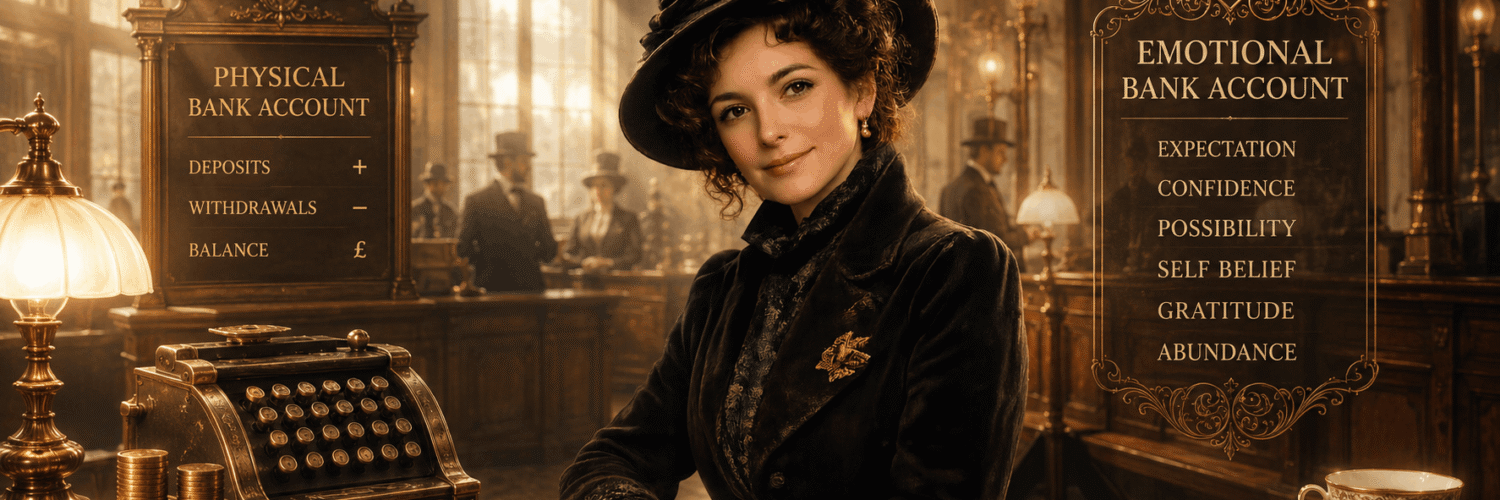
Most people have a bank account.
You probably check yours regularly. Perhaps daily. Perhaps several times a day if you’re feeling particularly brave.
Money comes in.
Bills go out.
And occasionally you stare at the balance for several seconds, hoping another zero might appear through sheer force of personality.
Unfortunately, banks remain stubbornly resistant to telepathy.
But what if you actually have two bank accounts?
One is the physical account you already know about.
The other is invisible.
Let’s call this your emotional bank account.
Florence Scovel Shinn didn’t use that particular expression, but the philosophy behind it fits beautifully with what she taught about prosperity, expectation, and the power of the spoken word.
And here’s the interesting part.
The balance in your emotional bank account could be affecting the balance in your physical one.
Your Bank Balance Is Not Your Identity
Your physical bank account tells you something very simple.
It tells you how much money you have available right now.
That’s useful information.
What it doesn’t tell you is how much you’ll have next year.
It doesn’t know about the business idea you might have next month.
It doesn’t know about the person you’re going to meet, the opportunity you might discover, or the unexpected door that could suddenly open.
Yet people frequently look at today’s financial circumstances to decide what’s possible tomorrow.
Money is tight, so their thoughts are tight.
“I can’t afford that.”
“I’ll never make that kind of money.”
“Money never stays with me.”
“People like me don’t become wealthy.”
Florence would have immediately noticed the danger.
You’re no longer describing a temporary circumstance.
You’re beginning to describe yourself.
Being Broke And Thinking Broke Are Two Different Things
Almost anyone can experience a period when money is short.
Jobs disappear. Businesses struggle. Unexpected expenses arrive.
And cars have an extraordinary ability to develop an expensive noise approximately three days after you’ve managed to save some money.
But a temporary shortage doesn’t need to become a permanent identity.
Being broke is a circumstance.
Thinking broke can become a habit.
This is where your emotional bank account comes into play.
Instead of containing pounds or dollars, this account contains your expectations, beliefs, confidence, and sense of possibility.
Every day you’re making deposits or withdrawals.
“I’ll find a way.”
Deposit.
“I’m open to new opportunities.”
Deposit.
“Nothing ever works for me.”
Withdrawal.
“I’ll never have enough.”
Withdrawal.
Some people have been making emotional withdrawals for years.
What’s Your Balance?
Here’s an interesting experiment.
Ask yourself:
How much money do I genuinely expect to have five years from now?
Notice that word.
Not want.
Not hope.
Expect.
Pay attention to your immediate reaction.
Perhaps your imagination expands.
You picture greater freedom, travel, investments, a successful business, or simply the wonderful feeling of never worrying about bills.
Or perhaps another voice appears.
“Don’t be ridiculous.”
“Where would that money come from?”
“People like us don’t have that sort of money.”
That voice is showing you something.
It’s giving you a glimpse of your emotional bank balance.
Florence Scovel Shinn And Prosperity Consciousness
Florence placed enormous importance on the words we use because our habitual language often reveals our habitual expectations.
If you continually say, “I can’t afford it,” eventually limitation begins to feel normal.
So change the language.
Instead of:
“I can’t afford that.”
Try:
“That’s not in my budget right now.”
Instead of:
“I’ll never make that kind of money.”
Try:
“I don’t know how yet.”
That tiny word changes everything.
One statement permanently closes the door.
The other leaves it open.
This isn’t about pretending you have money you don’t have.
Nor does prosperity consciousness mean marching into a Rolls-Royce showroom, ordering the most expensive car available, and telling them Florence will settle the bill.
She won’t.
It’s about refusing to let today’s circumstances place a ceiling on tomorrow’s possibilities.
Stop Looking At What You Don’t Have
Another enormous drain on the emotional bank account is continually focusing on what’s missing.
The house you don’t have.
The holiday you can’t afford.
The income you haven’t reached.
The opportunity that hasn’t appeared.
Florence taught people to turn their attention toward the good they desired rather than continually rehearsing its absence.
That doesn’t mean ignoring financial reality.
Manage your money wisely.
Pay your bills.
Know your numbers.
But don’t worship them.
Your bank balance is information.
It isn’t your identity.
Start Making Better Deposits
So perhaps it’s time to look after that second account.
Make deposits every day.
Better words.
Greater expectations.
New ideas.
Gratitude.
Confidence.
Possibility.
Spend more time around people and ideas that expand your thinking rather than shrink it.
And when an opportunity appears, take action.
Florence’s philosophy wasn’t about sitting on the sofa repeating prosperity affirmations while waiting for a suitcase containing $100,000 to fall down the chimney.
You can expect the door to open.
But when it does, you still have to walk through it.
Your physical bank account records the money you have today.
Your emotional bank account reflects what you believe may be possible tomorrow.
Look after both.
But never make the mistake of allowing the first one to dictate the balance of the second.
Your bank knows exactly how much money you have.
Thankfully, it has absolutely no idea who you’re becoming.
A Simple Seven-Day Experiment
For the next seven days, notice every negative statement you make about money.
Don’t criticize yourself when you catch one.
Simply change it.
Turn the withdrawal into a deposit.
And see what happens when you stop using today’s circumstances to predict tomorrow’s life.
Sometimes the first sign of greater prosperity isn’t more money appearing in your bank account.
It’s the moment you finally begin believing that more is possible.
P.S. If you enjoy exploring Florence Scovel Shinn’s ideas about prosperity, manifestation, and the power of your words, follow the Florence Scovel Shinn Legacy channel on YouTube for more videos.
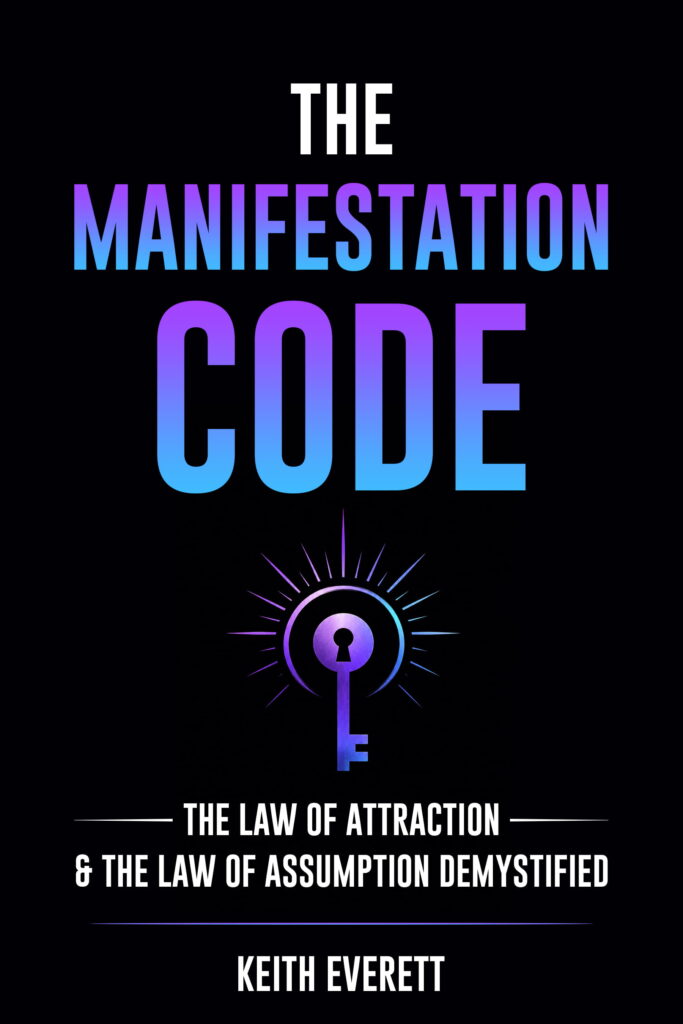
P.P.S. If you’d like to explore these principles more deeply, The Manifestation Code by Keith Everett explores the Law of Attraction and Law of Assumption in a practical, modern way.







Add comment